INTERNATIONAL COOPERATION : THE CICC WELCOMES AN OFFICIAL DELEGATION FROM THE KINGDOM OF CAMBODIA
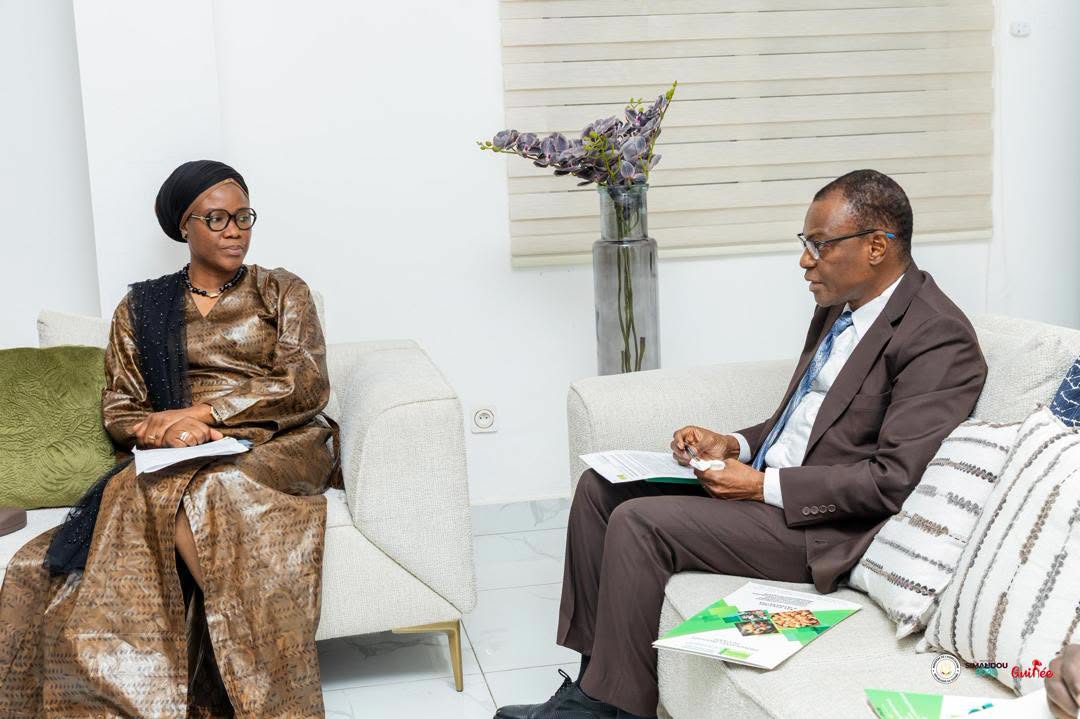
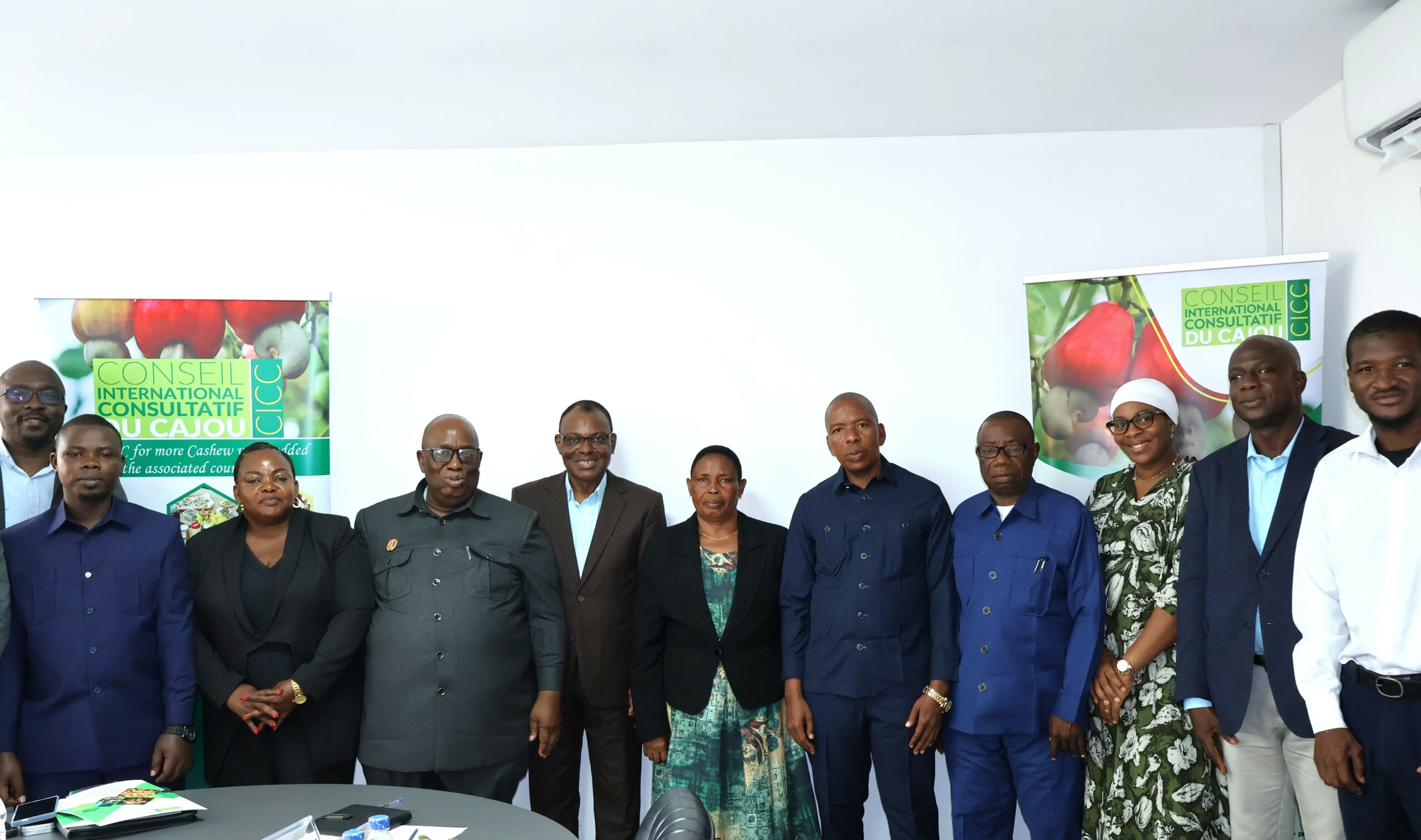
Abidjan, 21 September 2026 – The premises of the Consultative International Cashew Council (CICC) hosted, on Monday, an important working meeting with a strong official delegation of 14 members from the Kingdom of Cambodia led by His Excellency Mr. Samheng Bora, Secretary of State of the Ministry of Commerce. Facilitated by the GIZ Move/Comcashew project based in Côte d’Ivoire, this visit, organized with the support of the EU-German Cambodia Partnership for Sustainable Agriculture and Food Systems (EU-German CAPSAFE), co-funded by the European Union and the German Federal Ministry for Economic Cooperation and Development (BMZ), and implemented by GIZ, provided an opportunity for the exchange of experiences on policies for the development of the cashew industry in West Africa.
A framework for institutional consultation and sharing of experiences
The meeting took place in a friendly and cooperative atmosphere, starting with the formal presentation of the stakeholders. The work then began with the projection of an institutional slideshow outlining the strategic missions and main areas of intervention of the CICC.
This technical overview was completed by a presentation by the Executive Secretary of the CICC, Mr. André Mahoutin Tandjiekpon, who reviewed the history of the structure, its institutional configuration, as well as its main current axes and objectives focused on the standardization and promotion of the global cashew value chain.
The discussions made it possible to reaffirm the universalist vocation of the organization: in response to the question of the opening of the CICC to all producing countries, the Executive Secretary recalled that the institution is resolutely inclusive, recalling in this respect, the actions already undertaken for Cambodia’s membership.
Pooling efforts to structure the sector
Addressing the benefits of multilateral cooperation, the delegation was able to analyse how networking within an intergovernmental association gives Member States greater geostrategic and commercial weight in international markets. The discussions also shed light on the financing mechanisms and organisational architecture of the CICC, which are essential for the sustainable structuring of sectoral policies.
The Cambodian representatives, led by His Excellency Mr. Samheng Bora, expressed a keen interest in the organization’s expansion strategy, inquiring about possible accession steps with other major global players such as Vietnam and India. In this regard, the Executive Secretary said that talks have indeed taken place with Vietnam and should continue for the common interest of the countries joining the institution.
Market regulation and solidarity between Member States
In terms of institutional governance, the Cambodian delegation was interested in the periodicity of the CICC’s decision-making bodies and the provisions relating to price unification. The Executive Secretary indicated that the Council of Ministers meets annually, according to an established alphabetical order. Regarding price regulation, he stressed that a single tariff remains difficult to apply given the economic realities of each country, but that joint action must focus on optimizing production costs in order to ensure the efficiency of the sector in producing countries.
Finally, with regard to the reduction of economic disparities, the Executive Secretary was keen to qualify the notion of development inequalities between Member States, describing them not as “weak” countries, but as complementary economies capable of capitalizing on the experience of the most advanced nations. He concluded by recalling that this exchange of expertise is the very foundation of the CICC: a sustainable platform for mutual learning, solidarity and institutional capacity building.